

Your Website Should Feel Like Your Office: Why Therapists Need Custom Digital Spaces

You spent months choosing the right couch for your office. You spent 20 minutes choosing your website template.
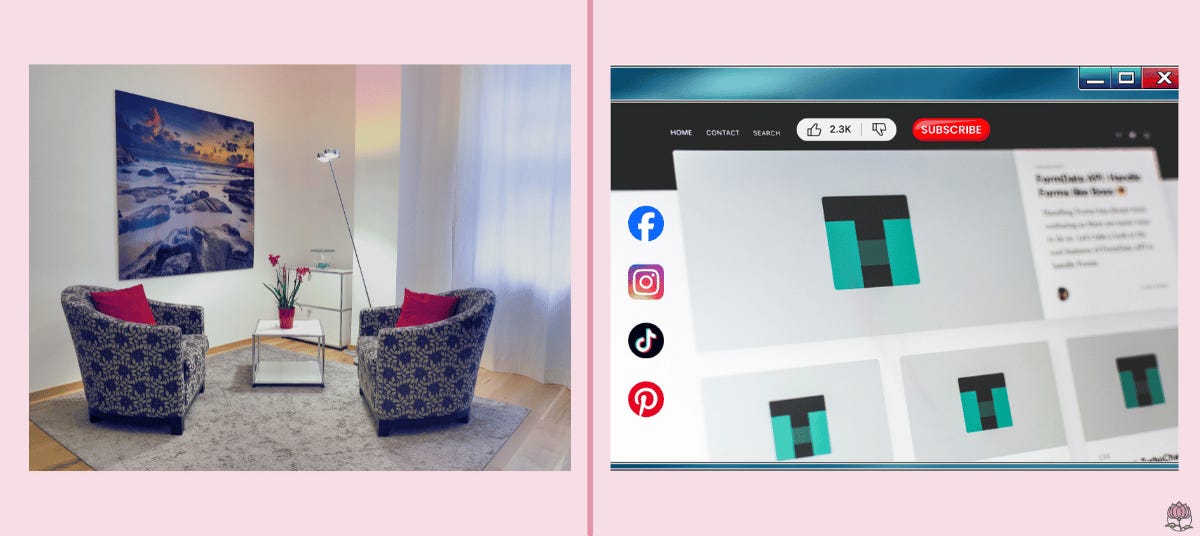
Think about your physical office for a moment.
The way the light falls through the curtains. The particular shade of paint you chose because it helps people breathe easier. That piece of art on the wall - maybe it’s calming, maybe it sparks curiosity, maybe it simply feels like you. The chair you selected not just for comfort, but for what it signals: you are welcome here, you can settle in, you are safe.
Every detail in your office is intentional. You didn’t throw together whatever furniture was cheapest or copy the layout from the therapist down the hall. You created a sanctuary. A space that holds the particular kind of healing you offer.
Now think about your website.
Does it feel like that same sanctuary? Or does it feel like a rented room?
The First Session Happens Online
Think about it. The therapeutic relationship doesn’t begin when someone walks through your office door. It begins when they land on your website at 2 AM, unable to sleep, finally gathering the courage to reach out for help.
In that moment, they are not evaluating your credentials. Not really. They are asking themselves a deeper question: Can I be vulnerable with this person? Will they understand me? Do they feel safe?
They’re reading your words, yes. But they’re also absorbing something harder to articulate - the feeling of your presence. The warmth (or coldness) of the design. Whether the space feels curated and cared for, or generic and rushed. Whether it feels like a real person lives here, or like a corporate waiting room.
A template website can list your specialties. It can display your degrees. But it cannot transmit the intangible quality that makes someone think: This person gets it. This person is for me.
The Psychology of Digital First Impressions
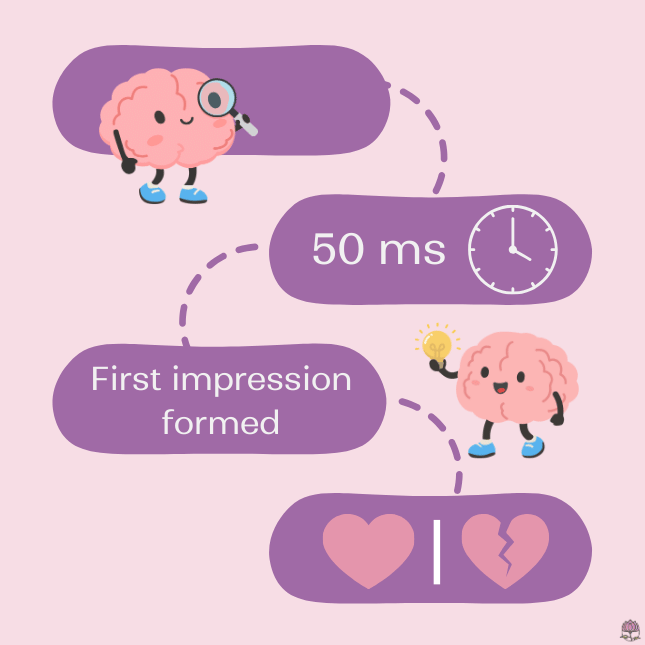
Research on web credibility tells us something striking: users form judgments about trustworthiness in 50 milliseconds - literally faster than the blink of an eye.[1] In that fraction of a second, visual appeal becomes the primary determinant of whether someone stays or leaves.
A comprehensive study by Stanford’s Persuasive Technology Lab analyzed over 2,500 participants evaluating websites. The results were clear: “design look” was the most frequently mentioned factor in credibility assessments, appearing in 46.1% of all comments.[2] Participants noticed layout, typography, color schemes, and imagery before they engaged with a single word of content.
Even more telling is what researchers call the “amelioration effect.” When identical content was presented with different levels of aesthetic treatment, the better-designed version was rated as more credible in 90% of cases (19 out of 21 comparisons).[3] The same words. The same information. Different visual presentation. And credibility shifted dramatically.
The average time for someone to make a full credibility judgment is 3.42 seconds.[4] That’s how long you have to signal that you are trustworthy, professional, and human enough to make the visitor stay and keep engaging with your site.
When a potential client encounters yet another square-template therapist site with the same stock photo of someone staring peacefully out a window, their brain registers: generic, forgettable, safe to ignore. Not because you are any of those things. But because the container you’re presenting yourself in is.
Contrast that with a website that feels unmistakably yours - colors that match your energy, language that sounds like your actual voice, imagery that reflects your particular worldview. The difference isn’t superficial. It’s the difference between someone feeling invited into relationship versus feeling processed through a system.
What Templates Can’t Hold
In my work as a developer, I find it important to connect to my potential clients’ needs and problems, even if they are not aware of them themselves yet. So I study therapists’ websites.
As a former psychologist myself, I can see just how much passion my colleagues have for their work just by looking at their various trainings. All the time, effort and money they pour into improving themselves and their skills over years, genuinely wanting to serve their clients better. It is truly inspiring.
Potential clients on the other hand, seeking help, usually don’t have such insider’s appreciation for what they read there. It is hard to understand what those credentials really entail and if they would be of any help for that particular individual.
Most people have no clue about the difference between cognitive behavioral therapy and depth psychology, what EMDR is and if exposure therapy would be relevant for them in any way. They don’t know whether they need to look for someone proficient in helping with anxiety, OCD or CPTSD. Most of the time, the only thing they know is that something is wrong and they can’t deal with it on their own any longer.
What they are looking for is the feeling certain sites give them. But here the problems begin. How do people usually look for a therapist nowadays? They google. Some random therapists’ websites will pop up. Great, but none of them are close by, nor do they offer teletherapy.
So they might consult Google Maps to find therapists in their vicinity. And maybe some will be knowledgeable enough to search through a registry. What will they find?
There might be someone nearby so the way to the practice doesn’t feel as dreadful and troublesome. But all they get is a name, address and a phone. Nothing else. Does this make you feel comfortable enough to be vulnerable and call, hoping you might get through at the 20th attempt just to stammer about how you are too dumb to get the simplest things done and need help?
So they might finally find someone who has an actual website they can look at, hoping it will reassure them in their need to ask for help. However, that site offers only confusing lists and masses of text about academic achievements, a dry phone number and looks like it was made in the era of MS-DOS.
The next website looks a bit more inviting. Some pictures, a neater spacing, maybe a smiling face. Still doesn’t feel welcoming but better than the alternatives before, right? To their relief, they find a contact form giving them the opportunity to sort their thoughts in the privacy of their solitude. They gather all their courage and press the Send button. And then... nothing. No reaction, no response, not even a confirmation page you’d usually get when submitting forms in other contexts online.
They wait for a few days, nervousness building up even further over time. Till at some point it dawns on them. What is the message they receive with that experience? You don’t deserve help. You are alone.
Apart from my own research, I have heard SO many variations of this story from my own clients when I was working as a psychologist. Unanimously they all stated that looking for a therapist is just too much hassle and they rather deal with their problems on their own, despite knowing - from experience - that it will not suffice.
And with this state of affairs, therapists wonder why services such as BetterHelp are so popular. Templates give you presence without presence. Visibility without being seen. Your website exists, but it doesn’t reach anyone. It doesn’t transmit the particular quality of safety that makes someone think: This person. This is the one.
Your Website as Sanctuary
I believe every therapist deserves a digital space that functions like their physical office - a container that holds their work with integrity, that welcomes the right people in, that creates the conditions for healing before a single word is spoken in session.
This isn’t about aesthetics for aesthetics’ sake. It’s about alignment. When your outer presentation matches your inner reality, something relaxes in the system. You stop feeling like you’re performing a version of yourself online. Your website becomes an extension of your therapeutic presence rather than a separate thing you have to maintain.
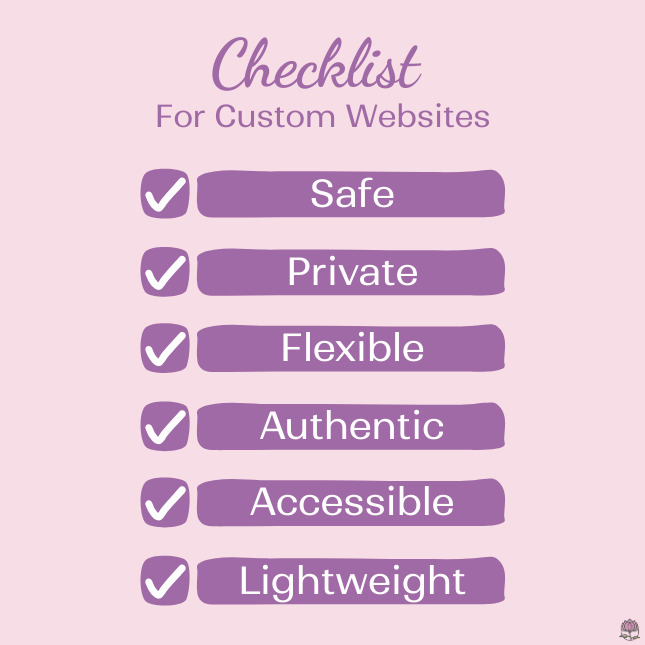
Your clients feel this too. They may not consciously think “this design feels authentic,” but they register the coherence, the unity, the harmony. The sense that what they see is what they’ll get. The subtle message: I pay attention to detail. I care about creating safety. I show up fully, even in the spaces between us.
The Question Beneath the Question
When therapists ask me whether they should invest in a custom website, they’re often really asking something else: Is it worth it to have a space that truly represents me? Am I allowed to take up room in that way?
My answer is always yes.
You ask your clients to be courageous - to show up authentically (to show up at all), to stop hiding behind masks, to claim space for their own healing. Your website is where you model that same courage. Where you say: This is who I am. This is how I work. This is what it feels like to be with me.
That kind of clarity doesn’t just help you attract clients. It helps you attract the right clients. The ones who are ready for what you specifically offer. The ones who will do deep work with you because they recognized themselves in your digital sanctuary and knew they had found their person.
Your practice deserves more than a template. It deserves a digital home as thoughtfully created as the physical one where you sit with people in their most vulnerable moments.
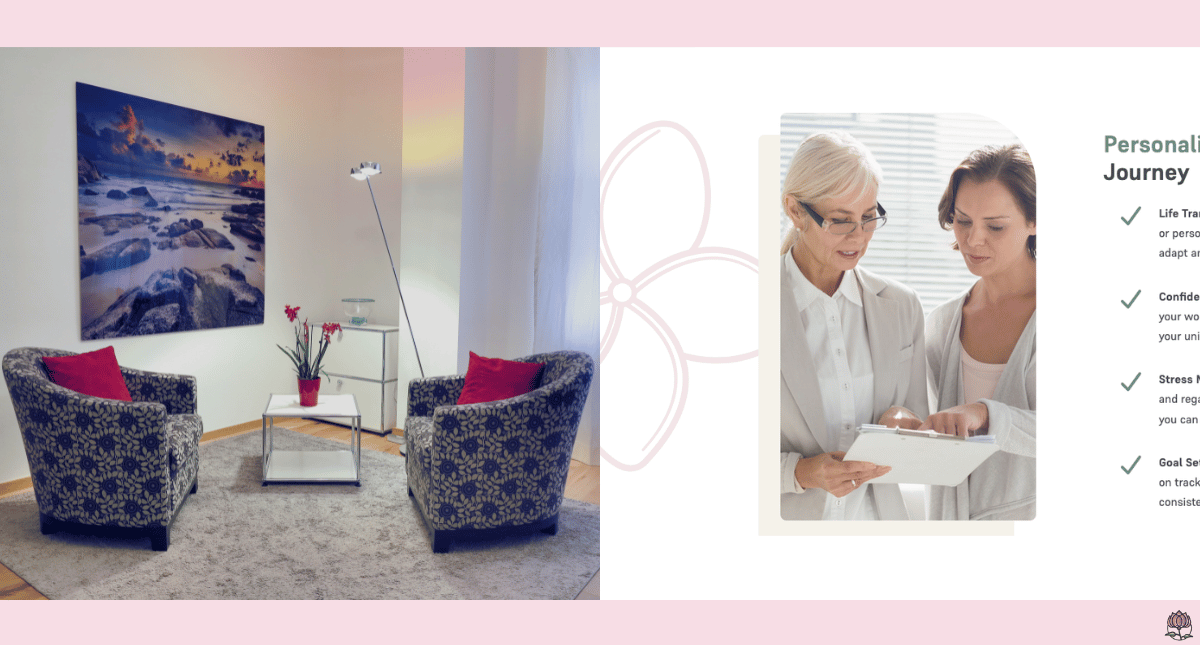
If you’d like to explore what that might look like for your practice, I welcome you to reach out at therajava.com. There’s no obligation or cost - just an open door to see if we’re a good fit.
References
[1] Lindgaard, G., Fernandes, G., Dudek, C., & Brown, J. (2006). Attention web designers: you have 50 milliseconds to make a good first impression! Behaviour & Information Technology, 25(2), 115–126.
[2] Fogg, B.J., Marshall, J., Laraki, O., Osipovich, A., Varma, C., Fang, N., Paul, J., Rangnekar, A., Shon, J., Swani, P., & Treinen, M. (2001). What makes web sites credible? A report on a large quantitative study. In Proceedings of ACM CHI 2001 Conference on Human Factors in Computing Systems (pp. 61–68). New York: ACM Press.
[3] Robins, D., & Holmes, J. (2008). Aesthetics and credibility in web site design. Information Processing & Management, 44(1), 386–399.
[4] Alsudani, F., & Casey, M. The effect of aesthetics on web credibility. (Study findings indicate users can judge website credibility in 3–4.2 seconds.)

I’m Lia - a psychologist-turned-developer who creates custom websites for mental health professionals through Therajava. I believe every therapist deserves a digital space that honors their work and protects their clients.
If you enjoy my work, please consider sharing it with someone who might also benefit from it. Your support means a lot to me. 💜